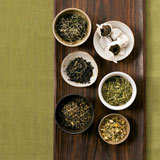
The Green Tea Diet
We
know you love tea. But are you drinking it right? For the definitive
word on tea-ology, we have to go back 13 centuries to a tract written
by a Chinese scholar named Lu Yu. There's nothing in there about
flavonoids or antioxidants, but one thing Lu Yu talked about, which has
held true through the ensuing centuries, is that tea-drinking is, well,
a state of mind.
Tranquility is central to the experience, Lu Yu
insisted. Although few people have access to a slow-flowing mountain
stream (his recommended source for water to brew the stuff) or use the
24 implements deemed necessary for the brewing process (Lu Yu might
have had a little too much time on his hands), if you want to do tea
right, you have to make the time: It's a sit-down-and-sip thing, not a
grab-and-gulp thing. "There is a vast culture associated with tea. The
Japanese tea ceremony, tea time in Britain. It's a calming moment,"
says Jeffrey Blumberg, Ph.D., director of the antioxidants research
laboratory at Tufts University in Boston.
It's a healthy thing,
too. A February 2006 study from National Taiwan University in Taipei
shows that tea can help people lose weight. Tea also has been shown to
lower risk of heart disease, breast cancer, increase insulin activity,
and slow the development of abnormal blood vessels on which tumors
feed. But which types work best for what? Here's the right stuff to
steep in your cup.
White
Picked
early, usually in spring, and air-dried. Uber-high levels of
antioxidants. Might even be healthier than green tea: A 2004 study by
biologists at Pace University showed that this variety inhibits
bacteria that cause everything from staph infections to pneumonia to
cavities.
Pu-erh
Named
for the town in southwestern China that popularized it, this rare
variety is aged (sometimes as long as 50 years) and has an earthy
flavor. Its health benefits are similar to black tea (below).
Oolong
Somewhere
on the spectrum between green and black. Causes you to burn fat at
higher rates than other teas, according to a study last year from the
Tea Research and Extension Association in Taipei, Taiwan.
Green
Leaves
are steamed or pan-fried immediately after being picked. Has a short
lifespan and should be brewed with low-temperature water so the subtle
flavor remains intact. (Boil the water, then let it sit for 2 or 3
minutes before brewing.) This variety increases metabolic rates and fat
oxidation (both necessary to lose weight), according to a 2006 study
also out of Taiwan.
Black
Leaves
are allowed to wilt after being picked. About three-quarters of the
world's tea is black. A 2004 study by the U.S. Department of
Agriculture shows that black tea lowers bad cholesterol and leaves good
cholesterol untouched.
Herbal Infusions
Like mint and chamomile? Sorry, they're not tea. They come from other plants and flowers. A 2005 study in the
Journal of Agricultural and Food Chemistry found that chamomile tea may ease cold symptoms and menstrual cramps.
For more, read Tasty Teas.
Try this easy White Tea Smoothie recipe.
© Copyright 2006, Rodale Publishing. All Rights Reserved.